
For many people, parking outside their own house can be both a reason for stress and come at a monetary cost if you need to buy a resident’s permit.
In particular urban regions, it can still be tricky to find a place to leave your car close to home.
A dropped kerb is a legal requirement if you want to drive across the pavement onto your property.
Any entry onto a public highway from a residential or commercial driveway area must have a dropped kerb.
A dropped kerb allows vehicles to cross the pavement from the road to a driveway and it is a legal requirement to have a dropped kerb if you intend to drive across the pavement onto your property.
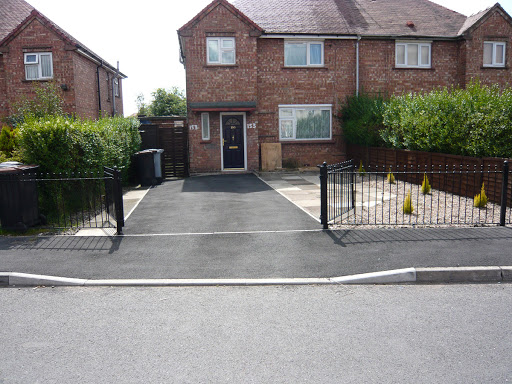
Putting in a dropped kerb can make a significant improvement to accessing your property along with helping to make sure people do not park across your driveway.
The law regarding dropped kerbs states: If you intend to drive a vehicle over the footway in to your driveway off a highway, then you will need to have a dropped kerb.
If you do not have dropped kerb, you must not drive over the footway. If you do so, you are breaking the law and enforcement action may be taken to prevent such practice.
The pavement may require to be reinforced in front of the property, and sometimes, it may be necessary for lampposts, manhole covers and other street furniture to be relocated.

Drop Kerb Specialists in Leeds
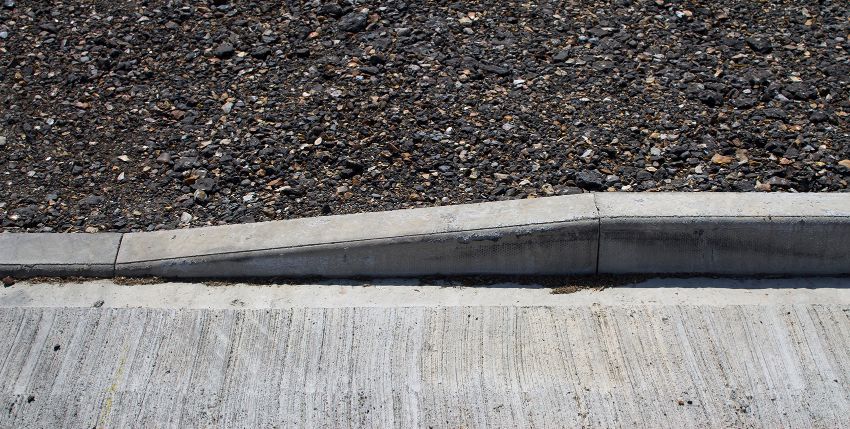
Dropped kerbs also known as vehicle access crossovers, are an alteration to the footpath. It involves lowering the kerb and preparing new foundations to the paving to enable a car to be driven onto the front area of a property.
The work involves lowering the kerbstones and strengthening the pavement to create a ramp, and must only be performed by an authorised provider with Street Works Accreditation, and who have the required Public Liability insurance to comply with the local authorities requirements.
Vehicle access cross overs comprise normally of 3 or 4 dropped kerbs with a tapered or transition kerb on either side. The standard maximum total width at road level of dropped kerbs for a VAC is 3.6 metres (i.e. normally 4 dropped kerbs).
Our team have many years experience in putting in drop kerbs and making an application for the appropriate planning permission. We are able to work in conjunction with your local county council to install a dropped kerb whilst abiding by all necessary regulations.
You can either apply to your local council for approval for a dropped kerb outside your property or we are able to apply to your local authority on your behalf.
We are members of the Streetworks Qualifications Register (SWQR). The SWQR holds information of qualified providers who have gained the appropriate qualifications in relation to the New Roads and Street Works Act 1991, which is essential for any provider excavating a highway.
We concentrate on delivering a service that gets it correct the first time. By investing in high quality components, equipment and processes, we make sure that we deliver lasting and cost effective solutions that will last.
We pride ourselves on our outstanding workmanship and client care and we make sure that each and every job is carried out to the highest quality standards.
Our staff can check out your site to carry out a free no-obligation survey. This allows our surfacing contractors to fully understand your needs and provide an accurate and competitive quote.
Local Kerb Dropping Contractors
The huge growth in demand for off-street parking has seen more and more people drop kerbs to establish car standing at the front of their properties.
Research by home insurer Direct Line shows that off-street parking is regarded by estate agents as a desirable feature which adds value to a property. This, combined with escalating parking restrictions in lots of residential locations, has brought about planning applications for dropped kerbs increase greatly over recent years.
But while putting in car standing space to the front of your home might add value to your property, there are numerous things to take into consideration, not least environmental issues, and flooding is a major concern.
When you replace a front garden with hard standing, rain can no longer absorb into the ground. As increasingly more households take this step, the collective effect seriously increases the danger of flooding, so it’s important to include drainage in your plans.
Planning permission is usually needed if you wish to drop the kerb outside your property to permit a car to cross the pavement. This is due to the fact that the pavement may need to be reinforced to take the weight of motor vehicles and prevent them from damaging the surface or any water pipes or cables beneath. It is also to ensure the new access will not be a safety hazard to other highway users.
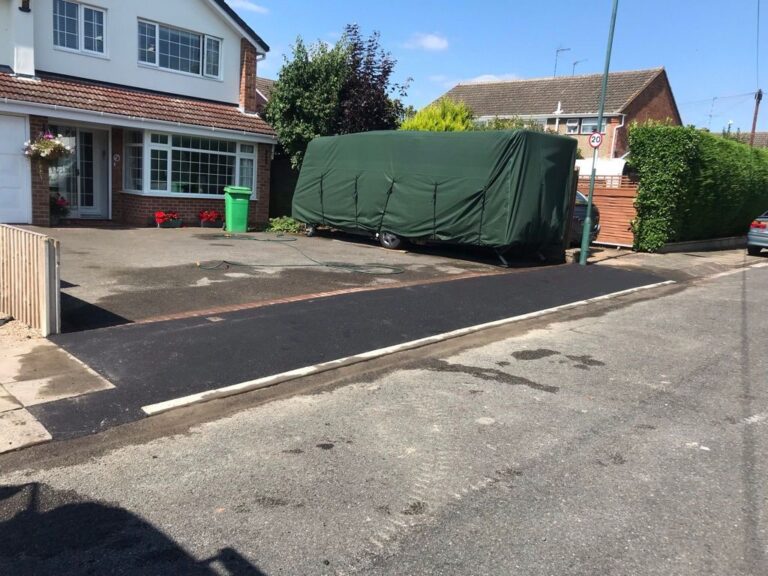
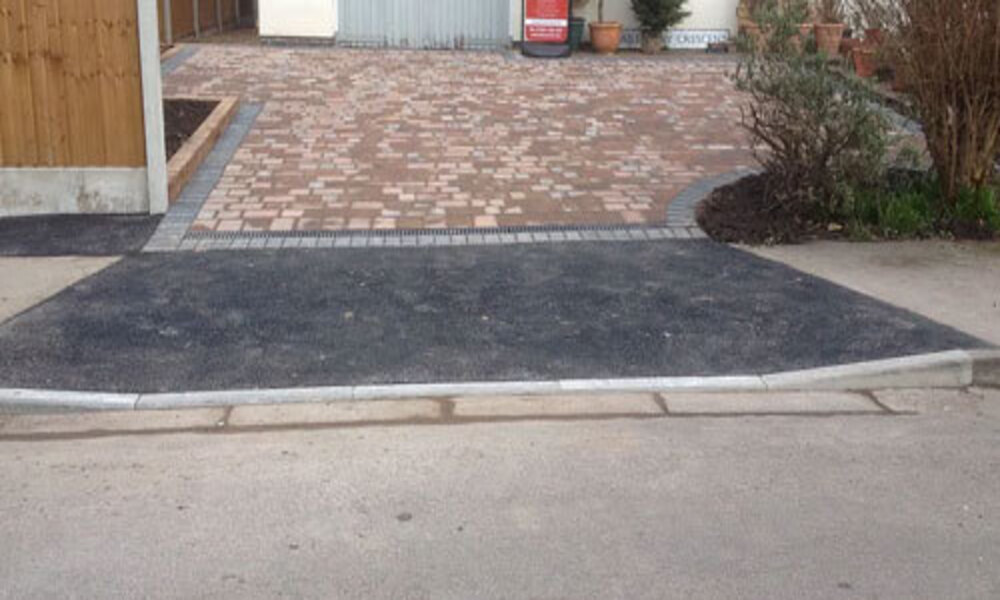
You can learn if you need planning permission by contacting your local council (you can identify the relevant council at the government website). How much it costs to apply will be dependent on your specific location.
If permission is approved, you then you need to locate a local specialist to do the work for you.
It’s definitely not a DIY job as the council will have criteria that contractors must meet. Some will only permit you to use their approved contractors, while others make it possible for you to use your own, just as long as they are accredited to the requirements of the New Roads and Street Works Act 1991, and hold public liability insurance. In this case, there may be an added fee for highway inspections by the council.
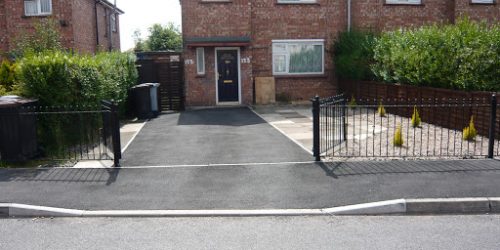

Leeds Vehicle Crossover Experts
But first it’s worth verifying if consent is likely to be granted. Below is a checklist of considerations. If any among these criteria is not met, planning permission is likely to be declined:
- Your front garden needs to be large enough for you to park your vehicle entirely on your property.
- The kerb needs to be at least 4.8 m from the front of your house; or 6m if the parking area is in front of an entrance or garage.
- The parking area should be at least 2.4 m wide.
- The proposed access to your property should be more than 10m away from a road junction; 15m away from busy junctions or on primary roads.
- It has to be at least 1.5 m away from street lights and other street furniture.
- It must meet visibility guidelines; this depends on the type of road.
- Suitable drainage needs to be provided to remove the surplus surface water.
The removal of tree roots should be avoided. - The slope from your home to the road must not be too steep.
- Finally, you as the property owner must consent to the kerb being dropped; for example, a tenant can not apply on their landlord’s behalf.